

The ‘to be parents’ are very excited to start the journey of parenthood. They eagerly wait for the little angel to come in their lives and fill it with happiness. But, as they say ‘kuch paane ke liye kuch khona padta hai’, this happiness too comes at a cost! Yes, that’s true!! The parents’ lives are turned upside down when this little munchkin comes with no manual! And so for these new parents many challenges await. From feeding the baby to changing the diaper, to understanding the baby’s language – “crying”!! But one more untold and unforeseen confrontation faced by the new parents is to understand the baby’s sleep routine and to handle baby’s sleep schedule. However, while doing this, their own sleep schedules are affected badly. And unfortunately, no one has sensitized them over these issues until they themselves face these problems of sleep in newborns and infants. Hence, today in Parenting Matters, I, Dr. Pallavi Bapat Pinge, will be discussing sleep patterns in newborns and infants, its importance and the Do’s and Don’ts for maintaining sleep hygiene in infants and their parents.
Sleep is one of the fundamentals of general well-being of an individual. It is essential for our physical, mental and social well-being too. Sleep plays a very important role in the development of the neonates too. Not only their own sleep, but also their parent’s sleep has an impact on their well-being. If a parent has inadequate sleep and is fatigued while caring for the needs of the baby, the parent won’t be able to fulfil his/ her caregiving duties efficiently. There will be irritation, mood swings, loss of temper and so on. This shall have an impact on the baby’s well-being too.
Let’s first understand sleep physiology in neonates and infants :
Newborns (i.e. babies upto 28 days old; also called neonates) and infants (1 month of age to 12 months of age/until their first birthday) sleep for more hours than adults because sleep is important for the developing brain and body. Sleep is divided into sleep cycles where each sleep cycle has 2 distinct types of sleeps- NREM (non rapid eye movement) and REM (rapid eye movement) sleep. The NREM sleep has 4 stages depending upon the depth of sleep and difficulty in arousal. The REM sleep is the stage in which we see dreams and it has a 55% share in the total sleep of an infant which reduces to 20-25% by the time the child is 5 years old.
A newborn baby can sleep 16-18 hours a day, with around 8-9 hours in daytime and 8 hours at night. However, the newborn’s sleep time is irregular, lasting mostly 2.5 – 4 hours and is synchronised with feeding time due to small stomach size.
Newborn’s sleeping time is divided into 3 parts – quiet sleep (similar to NREM ), active sleep (similar to REM) and indeterminate sleep. It is during the active sleep that babies smile, frown, twitch muscle and move arms and legs. Initially, a sleep cycle in neonate consists of equal proportions of active and quiet sleep and begins with the active sleep (i.e. REM sleep) and a single sleep cycle lasts for 50-60 mins. And each sleep duration of the neonate comprises of 1-2 sleep cycles only. This is the reason that newborns and few weeks’ old babies, wake up after every 2 hours approximately.
The sleep is governed by our circadian rhythm i.e. our body’s internal clock of day and night, which regulates our wakefulness and sleep duration. However, in neonates, this circadian rhythm is not fully developed i.e. their internal clocks are not synchronised with the external clock of 24 hours day and hence, these newborns can sleep during the day as well as night. And it is for this reason that at least upto 3 months of age, babies don’t sleep through the night for 6-8 hours like us. By around 6 months of age, the production of melatonin starts which develops day night rhythms. Also, levels of cortisol – the stress hormone start showing day night variations which have an impact on baby’s alertness and hence infants by 3-6 months ‘start settling at night’ i.e. sleep more than 5 hours at a stretch. However, some babies may take longer to develop this settling in during night time sleep.This disrupted day-night sleep cycle may continue even upto 1 year in some babies.
Thus, by one year of age, sleep starts consolidating into one block. Also, as the baby grows, along with other developments, baby’s sleep requirement reduces as compared to neonatal period. Infants sleep about 13 to 15 hours including night time sleep, morning naps and afternoon naps.



Now let’s focus on the do’s and don’ts for maintaining sleep hygiene in newborn and infants as well as parents.
- Do’s: Understanding hunger cues
Many parents consider that when the baby cries, baby is hungry. But, it isn’t like that. Every crying is not cry for feeding and also, every time the baby need not reach the stage of crying to indicate the need for feeding. In fact crying is a late sign of hunger. Offering milk to the baby, after the baby has started crying is too late and may actually make the baby upset and baby may become irritable and refuse to feed! Hence, parents should be able to understand the early hunger cues of the baby. When baby awakens from sleep, baby is first in the quiet alert phase. Baby is very still, may look at objects, respond to sound and motion and then may progress to active alert phase where baby is attentive to sounds and sights and moves actively. Here, the early signs of hunger are, moving slightly, turning head sideways, opening mouth and rooting (i.e. baby tries to search for the breast by rooting his lips to nearby objects which come in contact of the baby’s cheeks/turning head from side to side with an open mouth in search of the nipple). Then, baby will move on to mid cues of hunger which include stretching of body, increased bodily movements and bringing hands to face, making sucking motions and noises with the mouth or sucking on his fingers or putting fist in the mouth! However, if these cues are not noticed, the baby may progress from quiet alert phase to crying phase which is the late sign of hunger where there are erratic body movements, baby cries loudly and even face turns red.
Hence, understand the hunger cues.
2. Do’s: Know your baby’s favourite calming strategy/ know your baby’s sleeping cues.
When baby awakens slightly from sleep, it’s not necessary always to pick up the baby and calm him down. Sometimes, the bodily movements are just part of the baby’s active sleep and baby settles by self. However, if the baby is awake and crying and needs to be calmed down explore various strategies and find what suits your baby the best. Babies can be calmed down and made to sleep by cuddling, swaddling (its a technique of wrapping the baby using a cloth) , being held skin to skin (especially important in newborns and few weeks old babies), rocking, talking, listening to music or lullaby, stroking and so on! When babies are twice their birth weight i.e. around 6 months of age, their liver matures enough to supply glucose for the night and maintain blood sugar levels and hence, they may no longer need a night-time feeding. However, baby will still wake up for the sucking as the sucking becomes a stimulant for sleeping and helps the baby go into sleep. Hence, during these night time awakenings, baby only needs sucking as a stimulant to go back to sleep. So, breastfeeding or rather sucking becomes a routine for getting sleep.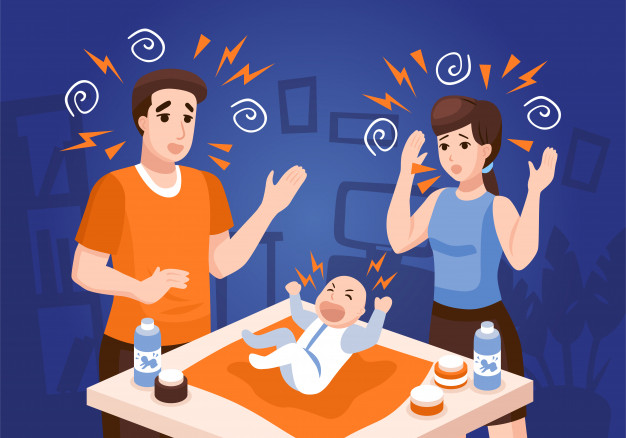
3. Do’s: Tips to help establish day night cycle in babies:
As mentioned previously, day night cycle doesn’t develop in babies until 3 months. However, to induce day night routine, light plays an important role. The natural light of day is followed by the darkness of the night. This natural cycle stimulates melatonin secretion in the brain and helps in stimulating the development of day and night cycle. However, in our current times, the kind of lifestyle we have in urban as well as rural areas, thanks to technology and electricity we are exposed to natural light till evening and artificial light till midnight and even beyond. This impairs the melatonin secretion. Hence, it is advisable for parents to simulate the changes of day and night at their homes by putting off the lights after 7 pm if baby is sleeping. Also, during the night time, when the baby awakens, do not put on bright lights. Use dim lights while feeding and caregiving of the baby and avoid over stimulating the baby as it can negatively affect the baby’s sleep.
4. Dos: Ensure night time feedings for establishing sleep cycle of babies.
Many working mothers have to express breast milk and keep it for their babies , to ensure their baby’s feeding in their absence. However, when with the baby, ensure baby feeds directly on the breast. It is necessary for the mothers working or not working, to continue breast feeding even in the night time, because the breast milk in the night has special sleep inducing characteristics. Breast milk contains tryptophan, an amino acid that is used by the body to manufacture melatonin- the sleep inducing hormone. Tryptophan levels rise and fall according to maternal circadian rhythms that means, the night time human milk is richer in tryptophan than in the morning, and hence when infants consume tryptophan before bedtime, they fall asleep faster. Thus, breastfeeding helps newborn sleep patterns synchronize with the 24-hour day. The role of tryptophan in altering baby’s sleep duration has been proved in various studies by feeding infants formula fortified with varying concentrations of tryptophan. And hence, night time feedings can help in establishing the 24 hour day night cycle of the baby.
5. Do’s : Methods of making an infant sleep
After the newborn period and first few months of life, it is advisable to place the babies in bed when sleepy but awake, so that baby learns to get on sleep on his or her own. This shall ensure that as the baby grows old, as a child the baby is not dependent on parents for going to sleep. Swaddling, use of white noise machines, soothing music and a dark bedroom can all help baby stay asleep for longer periods.
6. Do’s: Role of infant massage.
As it is observed by many of us, when babies are given massage and bath, they sleep well. Similarly, even in night time, a baby massage can be soothing for the baby and help the baby sleep faster, longer and with less frequent awakenings. This massage also helps the baby develop more mature levels of melatonin secretion which is a sleep inducing hormone.
7. Do’s: Understanding your baby’s sleep pattern
After 3 months of age, baby’s sleep habits become more predictable and parents can expect a regular nap schedule. Maintaining a sleep diary can help you to understand your baby’s sleep pattern. By 4 months, most babies need three naps a day; one in the morning, afternoon and early evening. Between 6 and 12 months, your baby will probably go from having 3 naps a day to 2 longer naps, in the morning and afternoon. Every baby’s napping needs are different. Some nap for as little as 20 minutes at a time, while others sleep for 3 or more hours.
8. Do’s: Rest when the baby is sleeping
This is very important, especially when the baby is just few days old and mother and baby are trying to develop a bond, understand breast feeding and its nuances. As, previously mentioned, newborns don’t have day and night cycle, they sleep for short duration all the day and night, interspersed by awakenings for feeding mostly. If mother doesn’t take rest in the day time, then when she has to be awake at night for feeding the baby, she is likely to get tired thus making the whole process of caring and feeding the baby during night a bitter experience. And then mothers have sore backs in the mornings, they stress out and this ultimately affects negatively the mother’s milk output.
9. Do’s: Take help
In many households, it is the job of the mother to take care of the needs of the baby like changing diaper, changing clothes, bathing, feeding etc; whether its day or night, whether it’s a few weeks old baby or few months old. But, this overburdens the woman, especially in nuclear family settings, as she is already occupied with her household duties and doesn’t have much of a respite even in the post pregnancy period. However, if the spouse helps in these care giving activities from the beginning, the fathers get more time with their kid from the very beginning and they also become confidant about handling the small infant! After all parenting is teamwork and so duties ought to be divided! Fathers can take responsibilities of changing nappies, calming the baby and putting the baby to sleep after feeding, talking to the baby if baby is awake but the mother needs rest and so on!! The opportunities are numerous…the only thing needs to be done is offering a helping hand!
For single mothers or mothers who are at their maternal place, they should ask for help from their other family members or friends to share some of the duties as and when possible. And this doesn’t make you a bad mother!! No one should try to overwork themselves just to ensure that they get the tag of ‘good mother’!! You can become a good mother, by taking care of your kid with the help of other family members too..!!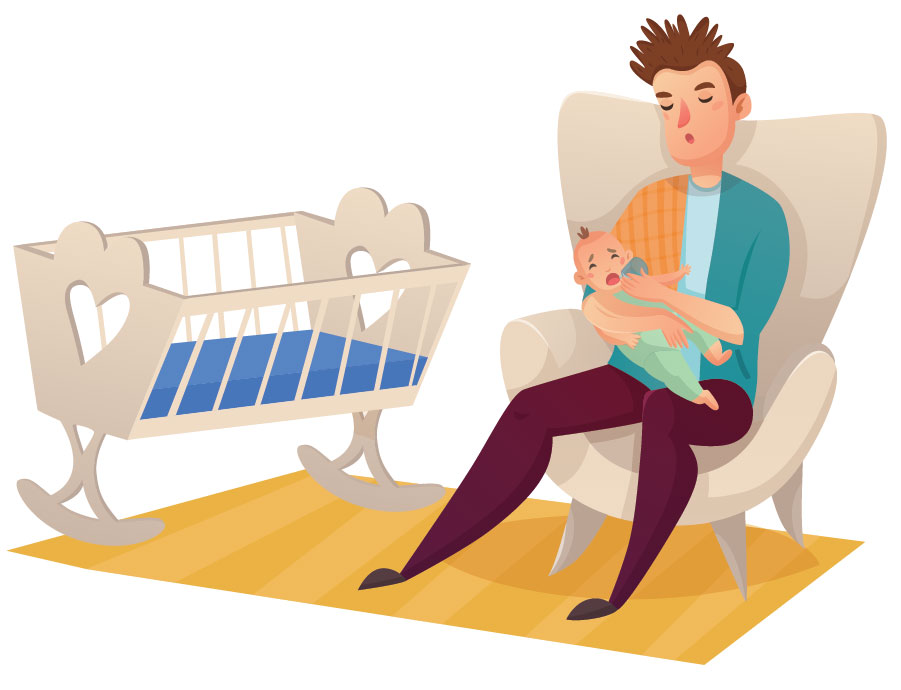
So, next time you feel like taking help, ask for it…that’s your right!!
10. Do’s: Handling your sleep debt
The frequent night time awakenings for feeding and care giving, hamper the much needed good night sleep for the mother. And if mother doesn’t have respite from household work in the day time, this inadequate sleep keeps on adding. This sleep debt can be dangerous for the mother as well as the baby. Sleep debt and sleep deprivation can lead to trouble concentrating, forgetfulness, mood swings, blurred vision, and alterations in appetite. Not only this, but if the sleep deprived state continues for long, that too in a lactating mother, it can have potential long term effects on health. Cumulative sleep deprivation for long can lead to damaging health consequences like obesity, diabetes, impaired glucose tolerance, cardiovascular disease, hypertension, anxiety, and depression.
Hence, ensuring 6-8 hours of sleep is a must, for which one of the solutions is taking rest in the daytime when the baby is sleeping. Power naps can be very beneficial in such times. Also, mothers can try methods other than sleep for rejuvenating self. Listen to favourite music, read a book, cook for the joy of cooking and not as a daily chore, or even work on a favourite hobby. It’s easier said than done. And finding time for self when you have a baby, its difficult, but then, here again, ask for help, here is a chance for your spouse and family to help. Also, prioritize healthy eating and physical activity in the form of some exercises, yoga etc. This will give you better energy during the day and promote better sleep at night. 20 minutes of ‘me time’ is all it takes to experience benefits like better mood and improved alertness. And this is very important because, your better mood and alertness can help you in taking better care of your baby.
11. Don’t: Never place the baby in prone position i.e. on the tummy while sleeping.
This is especially important till 1 year of age because infants sleeping in prone position are likely to re breathe exhaled air or have oxygenation problems and decreased arousal. Also, in prone position, the pharynx is more collapsible and hence, there is risk of airway obstruction. Hence, Infants should be placed on their back to sleep when put in their bassinet or crib, until 12 months of age.
12. Don’ts: avoid over-stimulating your baby
As the parents should learn hunger cues, they also ought to learn the baby’s tiredness or sleepy cues!. Infants often have a more difficult time falling asleep when they are overtired because cortisol, a stress hormone, is released and works to fight fatigue. This can further interfere with falling asleep. Hence, look for your baby’s signs that she is getting tired: they may include rubbing her eyes, yawning, and getting fussy. Donot force feed the baby when sleepy. Similarly, at night time, when the baby awakens, donot over-stimulate the baby by actively talking to the baby, keep the lights dim, keep the voices hushing and let the mother feed or change the nappy, whatever is the need of the hour! Sometimes, baby just stirs during the night. Give the baby a few minutes to try and settle on his/her own, before approaching the baby.
13. Don’ts:Don’t put your baby to bed with a bottle of juice, milk, or formula.
This is for babies above 6 month of age, in whom weaning has started. Water can be given if needed. Anything other than water can cause baby bottle tooth decay. Avoid use of bottle. Instead either use wati/katori/bowl and spoon or use cup for feeding. Feed or nurse your baby, and then put him or her down to sleep.
14. Don’ts: Don’t start giving solids before about 6 months of age
Up to 6 months of age, exclusive breastfeeding is recommended because the baby’s gut is not mature enough to digest outside food and also, breast milk is the complete food upto this age. However, after 6 months, the nutrients supplied by human milk is not enough as the baby is now growing and also the baby’s gut is now ready to digest semisolid and solid food. However, in some households, parents and grandparents start semi solid and solid food after 4 months of age because of the myth that solid food will help the baby sleep through the night. However, it should be noted that if baby is given solids before his/her system can digest them, he or she may have tummy ache and that shall worsen the sleep.
Now, let’s see some myths which most parents as well as grandparents have regarding baby’s sleep.
- Myth: Newborn babies when get up from sleep and cry, they cry for feeding
Reality: A newborn’s language of communication is crying! So, crying doesn’t always mean baby needs feeding. Baby can cry because of wet nappy or baby has passed stool, baby can cry because baby wants to be held in arms, baby can cry for need of swaddling, baby can cry when baby is swaddled and doesn’t want to be swaddled because of high temperature and so on!! These are the other reasons for crying and getting up from the sleep. Hence, every cry is not an indication for feeding. And mothers need to understand these cues. As the baby grows, within a couple of weeks mother starts understanding these different cues.
2. MYTH – Why sometimes babies cry excessively at night, as compared to day?
Reality: As previously mentioned, babies don’t have well developed day and night cycle. Hence, they can be awake as well as sleep during day as well as night. Similarly, they cry with same intensity during day or night. However, we as adults have our day night cycle tuned to 24 hour circadian rhythm! Hence, as the darkness falls, and night begins, our brain registers it and hence is sleepy! So, at 2 am, when the baby is crying just like in the morning, our sleepy mind takes this stimulus as an excessive cry and we feel that the baby cried excessively at night. Hence, next time, when your baby is crying at night, just relax and try to find the reasons of crying like hunger, need to be swaddled or rocked, need to change of nappy and so on!
3. MYTH- Why Baby gets up every 2 hours? Is the mother’s milk inadequate and is the baby’s stomach not full? This disturbs his sleep a lot.
Reality: As babies have only 1-2 sleep cycles in their single sleep duration, with each cycle being of 50-60 minutes and also because their sleep is coordinated with feeding, they are bound to get up even at night after every 2 hours. This doesn’t mean, that baby is missing out on his sleep or is getting inadequate sleep. As mentioned previously, the day night cycle is not developed until 3 months of age and in some babies even longer. So, your baby is bound to get up from sleep every 2-3 hours even at night and this doesn’t deprive the baby of sleep! So don’t worry, do not question your milk output and don’t worry about babies inadequate sleep.
4. Myth- Why does a breast fed baby get up frequently at night and why does a formula fed baby sleeps for longer hours? Is the breast milk inadequate for the baby?
Fact: Breast milk is easy to digest. Human milk is the perfect food for the baby, especially in first six months of life, as it contains all the vitamins, minerals and nutrients in right quantity and balance, nothing extra! This makes the milk easily digestible! Hence, after feeding, the stomach gets empty after about 2 hours and the baby is awake for feeding. Hence, the breast fed babies get up every 2 hours, even at night.
On the other hand, formula milk is synthetically prepared from cow milk and the nutrients absent in cow milk but required for the baby are added to the formula! Hence, it’s called ‘formula milk’ where the formula of human milk content is used to make a substitute using the cow milk!! Thus, the nutrient profile of formula milk is near to the human milk but doesn’t match it perfectly. That’s why it takes longer for the babies to digest formula milk and hence baby sleeps for longer time. However, it should be noted that breast fed babies as well as formula fed babies, even though have difference in night time sleeps, get equal amount of total sleep in 24 hours of a day i.e. 16-18 hours/day.
So, next time when you see your breast fed baby awakens every 2-3 hours, don’t worry, baby shall ensure his adequate share of sleep and won’t be deprived of sleep! Also, remember, breast milk is the best gift from a mother to the child, so don’t get tempted by the idea of feeding your baby formula milk at night just to ensure longer hours of sleep for the baby, when the baby is being breast fed all the day. Night time feeding on the breast during the newborn period and few weeks beyond that is very important for maintaining the milk output. Hence, night time feeding is essential and hence, your baby’s night time awakenings are essential!
5. MYTH: Using Diapers at night time helps to ensure that baby’s sleep is not disturbed.
Reality: Many parents are worried that if they use cloth nappies in the night time, the baby may remain in wet nappy for long or baby’s sleep may be disturbed because of frequent urination and wetting of the nappies. However, use of diaper might allay parents’ worry regarding disturbed baby’s sleep, but it exposes the baby to the risk of diaper rash, allergy to the diapers and also an increased risk of infection. The disposable diapers absorb the urine and so baby doesn’t feel wet, but humidity persists in there and this can be a good place for growth of bacteria, thus increasing the risk of skin infections as well as urinary tract infections as the bacteria may enter the urethra and the urinary tract of the babies. Hence, use of diapers for babies is not advisable, whether day time or night time. Use cloth nappies.
So, after reading all this, sleep hygiene and caregiving of neonates and infants may seem frightening for the new parents and the-would be parents, but do not panic, all you have to do is just follow the do’s and don’ts as mentioned in this blog and get your myths regarding your baby’s sleep busted and have a good sleep for yourself and the baby too!
Do like, share our blog and give your feedback in comments section. The blog is also available as a podcast on KUKU FM. The link for the podcast is https://applinks.kukufm.com/88dJcHHYdntDFwzSA
(The author is a Developmental and Behavioural Paediatrician and deals with issues of children’s development and behaviours. The author can be contacted through mail on drpallavi.paeds@gmail.com )
(Illustrations designed by freepik.com)

 parenting matters